Theory behind Mind Maps
As you read about the nature and workings of your memory and about your brain’s other major functions, you will realize the extraordinary extent of its capacity and potential.
The Mind Map is a tool used to entice, delight, stimulate and challenge you. You will discover some astonishing facts about your brain and its function, and you will take the first major steps on the path to freedom of the mind.
What is a Mind Map?
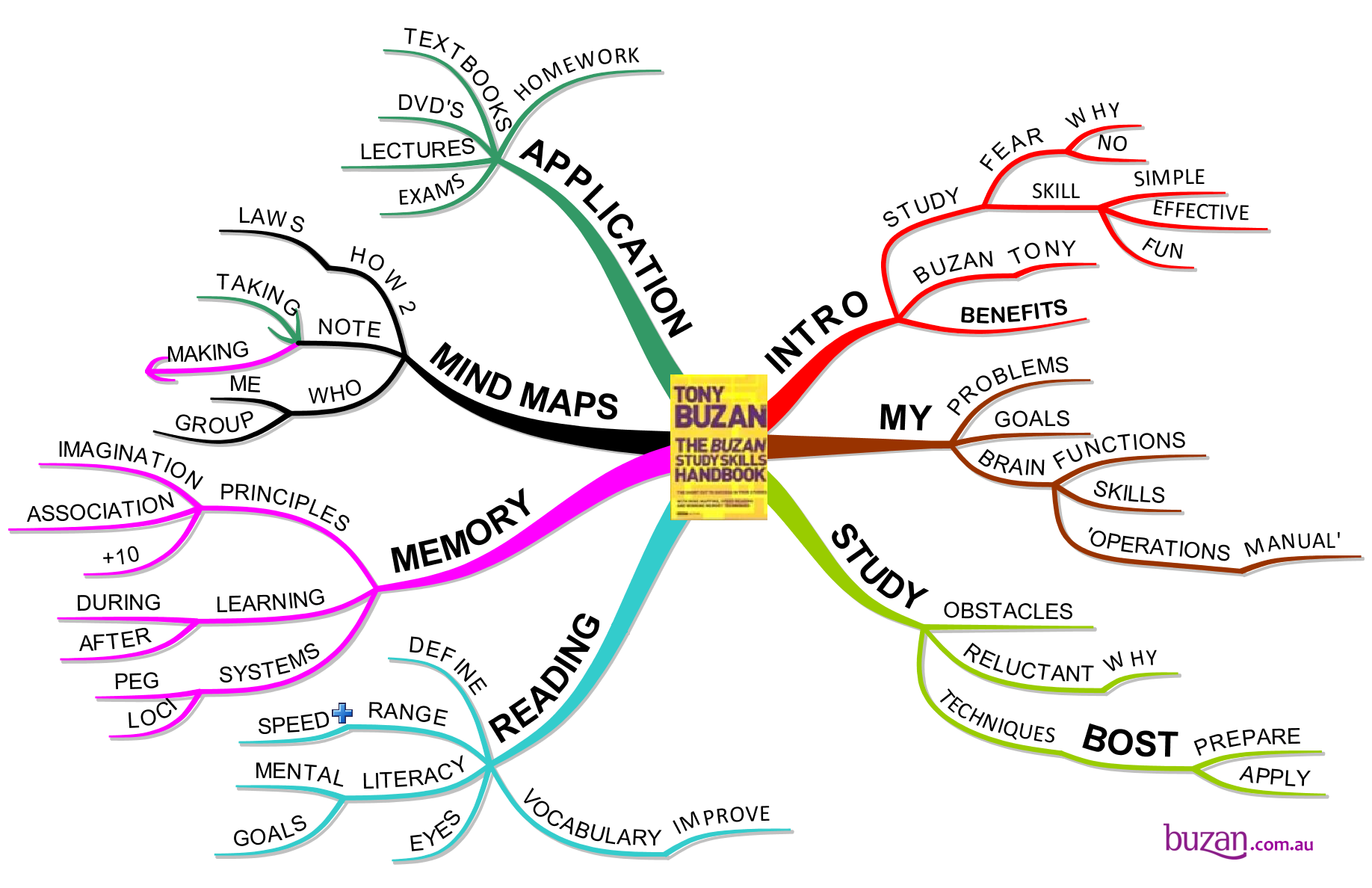
A Mind Map is a highly effective way of getting information in and out of your brain – it is a creative and logical means of note-taking and note-making that literally “maps out” your ideas.
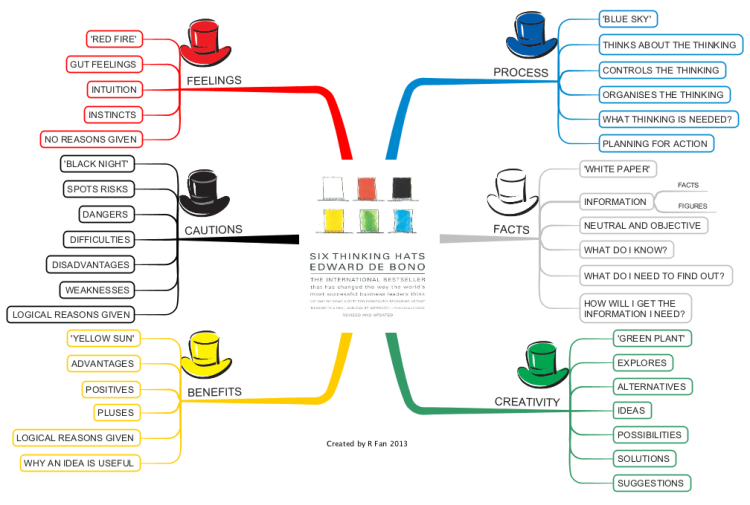
All Mind Maps have some things in common. They have a natural organizational structure that radiates from the center and use lines, symbols, words, color and images according to simple, brain-friendly concepts. A Mind Map converts a long list of monotonous information into a colorful, memorable and highly organized diagram that works in line with your brain’s natural way of doing things.
One simple way to understand a Mind Map is comparing it to a map of a city. The city center represents the main idea; the main roads leading from the center represent the key thoughts in your thinking process; the secondary roads or branches represent your secondary thoughts, and so on. Special images or shapes can represent landmarks of interest or particularly relevant ideas.
The Mind Map is the external mirror of your own radiant or natural thinking facilitated by a powerful graphic process, which provides the universal key to unlock the dynamic potential of the brain.
The five essential characteristics of a Mind Map:
- The main idea, subject or focus is crystallized in a central image.
- The main themes radiate from the central image as ‘branches’.
- The branches comprise a key image or key word drawn or printed on its associated line.
- Topics of lesser importance are represented as ‘twigs’ of the relevant branch.
- The branches form a connected nodal structure.

The brain’s natural architecture and foundation of Mind Maps
Radiant Thinking – a clearer, more natural and more efficient way of using our brains
What happens in your brain when you taste a ripe pear, smell flowers, listen to music, watch a stream, touch a loved one, or simply reminisce? The answer is both simple and amazingly complex. Each bit of information entering your brain, every sensation, memory or thought, which incorporates every word, number, code, food, fragrance, line, color, image, beat, note and texture can be represented as a central sphere from which radiate tens, hundreds, thousands, even millions of hooks. Each hook represents an association, and each association has its own infinite array of links and connections. From this gigantic information processing ability and learning capacity derives the concept of Radiant Thinking of which the Mind Map is a manifestation. Your brain’s Radiant Thinking pattern may thus be seen as a gigantic Branching Association Machine – a super bio computer with lines of thoughtradiating from a virtually infinite number of data nodes.
State-of-the-Art Research into the Left and Right Hemispheres
Almost the moment Mind Maps came into use another major piece of scientific research confirmed their validity as a brain-compatible thinking method. In California, Dr. Roger Sperry, who won a Nobel Prize for his research, confirmed that the evolutionarily latest part of the brain, the ‘thinking cap’ of the Cerebral Cortex, was divided into two major hemispheres, and those hemispheres performed a comprehensive range of intellectual tasks, called cortical skills. The tasks included: Logic, Rhythm, Lines, Color, Lists, Daydreaming, Numbers, Imagination, Word, Gestalt (seeing the whole picture). Sperry’s own research confirmed that the more these activities were integrated, the more the brain’s performance became co-operative, with each intellectual skill enhancing the performance of other intellectual areas. When you are Mind Mapping®, you are not only practicing and exercising the fundamental memory powers and information processing, you are also using your entire range of cortical skills.
The Mind Map is made even more powerful by the use of all the left and right brain-thinking tools, which enhance the clarity, structure and organization of your thinking. And because the Mind Map constructively uses the tools of Imagination, Associationand Location, as well as the tools of the left and right brain, you can consider the Mind Map the ultimate thinking tool that incorporates all the significant and potent ways of thinking into its own structure.
The Power of Images
If the Radiant Thinking ability of the brain can be applied to the ‘left cortical skill’ of words, can the same power be applied to the ‘right cortical skill’ of imagination and images? In 1970 Scientific American magazine published Ralph Haber’s research showing that individuals have a recognition accuracy of images between 85 and 95 percent. There is a well-known quote, “A picture is worth a thousand words”. We associate and remember images because they make use of a massive range of your cortical skills, especially imagination. Images can be more evocative than words, more precise and potent in triggering a wide range of associations, thereby enhancing creative thinking and memory. These findings support the argument that the Mind Map is a uniquely appropriate tool. It not only uses images, it is an image.
Tony Buzan and Mind Mapping
Although people have been creating maps using an image-centered radial graphic organization technique for centuries, British psychology author Tony Buzan has made a claim to the origin of the Mind Map. He argues that ‘traditional’ outlines require that the reader scans the information from left to right and top to bottom, whilst the brain’s natural preference is to scan the entire page in a non-linear fashion. Buzan also uses widespread assumptions about the cerebral hemispheres in order to promote the exclusive use of mind mapping over other forms of note making.

 One of the more remarkable things gymnasts do is balance on a four inch wide beam, performing skills that most would not even think doable on a floor.
 While each family gets to make their own rules, in my home and at my gym club, school is the priority. That doesn’t mean that there won’t be times when a school absence happens to attend an important competition but it means that on the whole, school comes first.
 There is a saying in time management: if you don’t plan your day, it will plan you. It is essential that there is a plan in place and that plan is recorded in a planner. When all of your time that is scheduled (commuting time, class time, and gym time as well as other obligations like physical therapy, faith-based activities and social engagement) is marked out in a planner, you can actually see where you have gaps for your homework/study time.
 Plan how you can use study halls, time after you eat your lunch and travel time to school, practices and competitions. A lot of work can be accomplished in 10 to 15 minute chunks. And absolutely take advantage of your study halls at school. Another tip: use audiobooks or study recordings you made yourself while traveling if reading in a moving vehicle makes you feel sick.
 If you think you can wait until the last minute, you are wrong. Busy people cannot afford to procrastinate. And will result in you in falling behind which makes a large hole from which to have to dig. Stay ahead of your schoolwork!
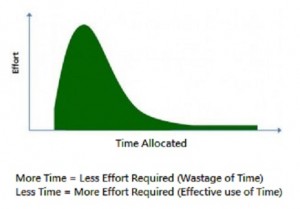
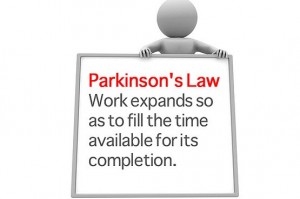 Parkinson’s law says that the time you give yourself to complete a task is the time it will take. So, set a goal to write the rough outline of a paper or to read a chapter of your novel in 20 minutes. You might not get it done that quickly but by tightening your deadlines you are more likely to stay on task and limit your distractions.
 Ask your coaches in advance how they would prefer you approach coming to workout on days you have too much work. Some are open to athletes attending practice at the beginning and leaving early to do schoolwork. Others would rather that athlete come late to practice after the work is done. Still others would prefer that athlete to come to practice and take off a certain rotation where she requires less practice to do homework. And still others would prefer the athlete take the entire practice off.







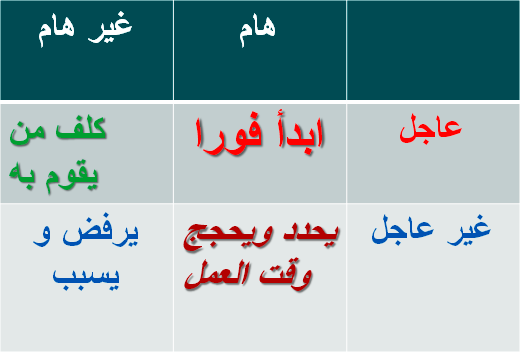










 الجدولة:









 قسم يومك 3 أقسام أو خمس أقسام صبحك عصرك ليلك و كل فيه مهامه


 “Must Know” Information About




































































 :
: